
Nathan Mayer Rothschild died in 1836 worth £3.5 million, according to the historian Niall Ferguson — about $483 million (£361 million) in today’s money, or 0.62% of British national income at the time.
That figure makes him the richest Rothschild of the family’s great century, and one of the richest men in Britain. He was the third son of Mayer Amschel Rothschild, the Frankfurt money changer who sent his five sons to five European capitals. Nathan drew London — and London, at the height of the Napoleonic Wars, was where the money was. He built the family’s most powerful house, financed Britain’s war against Napoleon, and became so rich that his name became a byword for wealth itself. But the most famous story about him — that he made a fortune from hearing about Waterloo a day before anyone else — is largely fiction. The truth is more interesting, and it is in the records.
At a Glance
| Net worth at death (1836) | £3.5 million (Niall Ferguson estimate) |
| In today’s money | ~$483 million (£361 million), inflation-adjusted |
| Share of British national income | 0.62% at death |
| Born | 1777, Frankfurt |
| Died | 28 July 1836, Frankfurt, aged 58 (infected abscess) |
| Arrived in England | Manchester 1798; moved to London 1808 |
| Bank founded | N M Rothschild & Sons, 1811, 2 New Court, London |
| War finance | £9.8 million in subsidy loans in 1815 alone (≈£910 million in 2024) |
| Son and heir | Lionel de Rothschild, who financed the 1875 Suez Canal purchase |
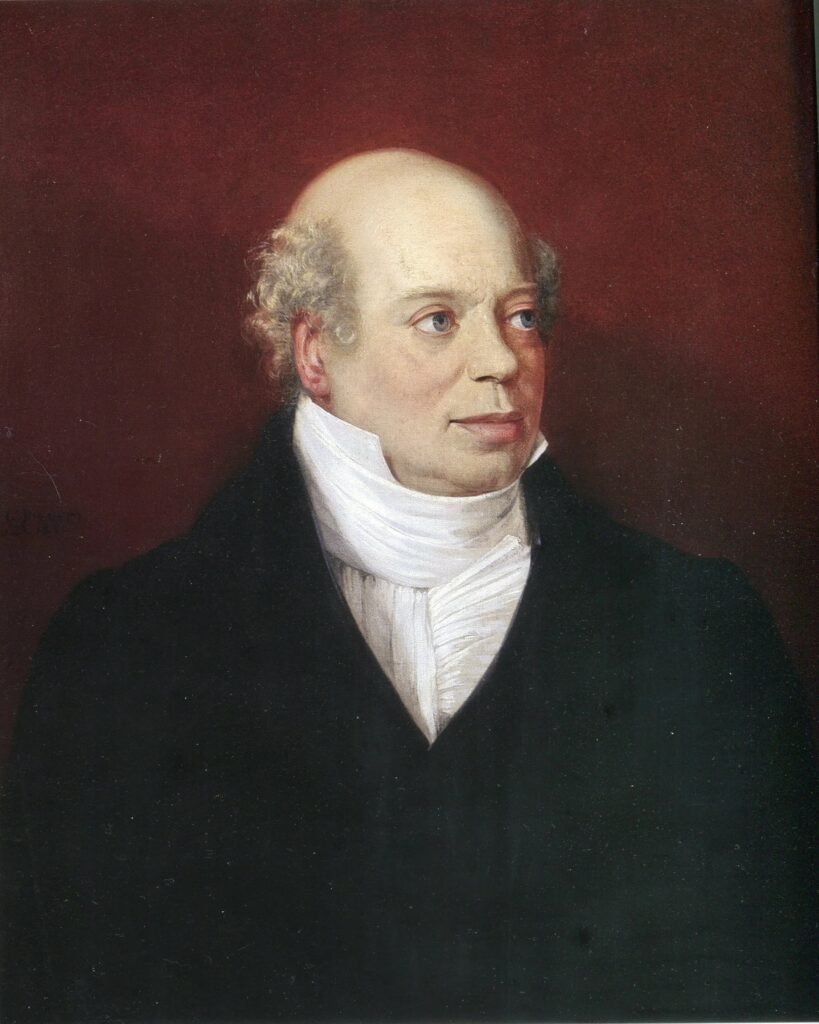
From Manchester textiles to the City
Nathan arrived in England in 1798, at the age of twenty-one, and settled in Manchester, then the centre of the world’s textile trade. He traded in cloth and dyes, and he learned the English market from the inside. In 1806 he moved his business to London, and in 1808 he settled in the City for good. In 1811 he founded N M Rothschild & Sons at 2 New Court, St Swithin’s Lane — the address the bank would occupy for more than two centuries.
His timing was perfect. Britain was at war with Napoleonic France, and war needs money moved across borders at speed. Nathan’s family network — brothers in Frankfurt, Vienna, Naples and Paris, with their own private courier service — could move gold and bills of exchange faster and more safely than any government department. The British Treasury noticed. Nathan became the man who moved the money that kept Britain’s allies in the field, and the commissions and exchange profits made him rich.
Financing the war
The scale of Nathan’s war business is hard to grasp today. In 1815 alone, the final year of the war, he handled £9.8 million in subsidy loans — money Britain paid to its allies to keep their armies fighting. In 2024 terms that is roughly £910 million. He bought government bonds, supplied gold to the Bank of England, and managed the payments that held the coalition together. When the Bank of England faced a liquidity crisis in 1825–26, it was Nathan who supplied the coin that steadied it.

This is where his fortune was actually made: not in one clever coup, but in years of war finance, bond dealing and bullion trading, with the family network giving him an edge no rival could match. By the 1820s he was the dominant figure in the City of London, and the Rothschild name in Britain meant Nathan. His brothers were rich; Nathan was the richest of them, and the London house became the family’s flagship.
The Waterloo story — what really happened
The most famous story about Nathan concerns the Battle of Waterloo, fought on 18 June 1815. In the popular version, Nathan received the news of Wellington’s victory a full day before the British government, rushed to the London Stock Exchange, and made a fortune by buying government bonds before prices rose — or, in some versions, by first selling to trigger a panic and then buying at the bottom. The tale has been retold in countless books, films and conspiracy theories. It is largely fiction.
The Rothschild archive contains no record of any such gain, and Nathan’s own correspondence shows nothing of the kind. What the records do show is real, and impressive enough: Nathan did buy government bonds after Waterloo, and he sold them in 1817 for a profit of about 40%. But that was a considered investment over two years, not a one-day coup based on secret news. His wealth came from war finance and bond dealing over a decade, not from a single day of insider trading. The Waterloo legend survives because it is a good story. The archive survives because it is the truth.
Death and legacy
Nathan died on 28 July 1836 in Frankfurt, aged only 58, from an infected abscess — a minor ailment that turned fatal before the age of antibiotics. He was buried in London, and the City mourned him as one of its own. His fortune of £3.5 million passed to his sons, and the bank passed to Lionel, his eldest son, who would extend the family’s power into a new era. In 1875 Lionel lent the British government the £4 million that allowed Prime Minister Benjamin Disraeli to buy Egypt’s shares in the Suez Canal — the most famous loan in the family’s history, and one arranged in a matter of days.
Nathan’s true legacy is not the £3.5 million. It is the London house itself: N M Rothschild & Sons became the most powerful merchant bank in the world, the model for international finance, and the institution that carried the Rothschild name into the 20th century. The £3.5 million was the largest personal fortune any Rothschild ever held at the family’s peak. No later member of the family, in real terms, matched it.
Frequently Asked Questions
What was Nathan Mayer Rothschild’s net worth?
Nathan Mayer Rothschild died in 1836 worth an estimated £3.5 million, according to the historian Niall Ferguson. Adjusted for inflation that is about $483 million (£361 million) today, and it equalled roughly 0.62% of British national income at the time.
Did Nathan Rothschild make a fortune from the Battle of Waterloo?
No — not in the way the famous story claims. There is no record in the Rothschild archive of a fortune made from early news of Waterloo. He did buy government bonds after the battle and sold them in 1817 for about 40% profit, but his wealth came from years of war finance and bond dealing, not a one-day coup.
What was N M Rothschild & Sons?
The London bank Nathan founded in 1811 at 2 New Court, St Swithin’s Lane. It became the most powerful merchant bank in the world in the 19th century, financing governments, railways and the Suez Canal purchase of 1875.
Who inherited Nathan Rothschild’s fortune?
His eldest son Lionel de Rothschild took over the bank and the fortune. Lionel financed Britain’s purchase of the Suez Canal shares in 1875 with a £4 million loan to Disraeli’s government.
Related reading: Rothschild family, Jeff Bezos, how net worth is calculated, what is a good net worth, and James de Rothschild.
Sources
- Wikipedia — “Nathan Mayer Rothschild”
- LoveMoney — “How rich are the Rothschilds today?”
- Wikipedia — “Rothschild family”
- Niall Ferguson, historian — Nathan’s £3.5 million fortune at death (1836), 0.62% of British national income, via LoveMoney and Wikipedia
- Rothschild Archive — no record of a Waterloo fortune (the Waterloo-early-news story is largely fiction), via Wikipedia
Net worth figures are estimates based on publicly available sources and may vary.