No verified personal net-worth figure exists for Mayer Amschel Rothschild, the founder of the Rothschild banking dynasty — no record of his fortune at his death in 1812 survives, and any number attached to his name today is a guess.
That absence is itself the story. Mayer was not a billionaire in the modern sense. He was a Frankfurt money changer who became the trusted banker of one of Europe’s richest princes, and whose true wealth was not a pile of gold but a system: five sons, five cities, one family firm. When he died in 1812, the banking house he had built was still young. The vast fortune the name later carried was made by the sons, using the network their father designed. This post tells what is actually known about the man, his money, and the plan that made his family the richest in Europe within a generation.
At a Glance
| Personal net worth | No verified figure exists |
| Born | 1744, Frankfurt, Judengasse (Jewish ghetto) |
| Died | 1812, Frankfurt |
| Father | Amschel Moses Rothschild, money changer |
| Main client | Landgraves of Hesse-Kassel |
| Banking house founded | 1760s, Frankfurt |
| Sons and their cities | Amschel (Frankfurt), Salomon (Vienna), Nathan (London), Carl (Naples), James (Paris) |
| Combined capital, five houses | £1.8 million in 1818; £9.5 million by 1852 |
| Family motto | Concordia, Integritas, Industria (Harmony, Integrity, Industry) |
| Coat of arms | Five arrows for the five sons (Psalm 127) |
From the ghetto to the court
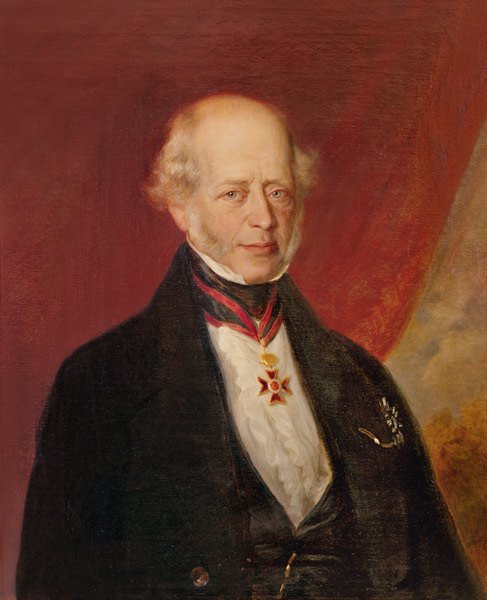
Mayer Amschel Rothschild was born in 1744 in the Judengasse, the walled Jewish ghetto of Frankfurt, where Jews were confined to one narrow street and forbidden most trades. His father, Amschel Moses Rothschild, was a money changer — a trade Jews were allowed to practise, exchanging coins and dealing in the bills of merchants. Mayer learned the trade at his father’s counter, and then, unusually for a ghetto Jew, he was taken on as an apprentice at the banking house of Oppenheimer in Hanover, where he learned how the great merchant banks of Europe worked.
Back in Frankfurt, Mayer built a business dealing in rare coins and medals. Coin dealing sounds small, but in the 18th century it was the door to the richest men in Europe: princes and landgraves collected coins, and a clever dealer became their trusted adviser. Mayer’s great client was the Landgrave of Hesse-Kassel, one of the richest rulers in Germany, whose fortune came largely from renting his soldiers to Britain. Mayer became the Landgrave’s court factor — his financial agent — managing the Landgrave’s money, lending it, and investing it across Europe. In the 1760s he founded his own banking house in Frankfurt, and the court connection gave it a reputation no other Jewish bank in Germany could match.
The name and the shield
The family name itself comes from a house. In Frankfurt’s Judengasse, houses were known by the signs hung outside them rather than by street numbers. The Rothschilds’ ancestral house, built in 1567, bore a red shield — in German, “zum rothen Schild”, meaning “at the red shield”. Over the generations the name of the house became the name of the family: Rothschild, red shield.
When Mayer’s sons were made barons by the Austrian emperor in 1822, the family took a coat of arms that told its own story. At its centre is a shield bearing five arrows, held together — one arrow for each of Mayer’s five sons, and a reference to Psalm 127, which compares sons to arrows in the hand of a warrior. The family motto was Concordia, Integritas, Industria: Harmony, Integrity, Industry. The arrows and the motto were not decoration. They were the business plan, drawn as a picture: the sons would stay united, and the family would act as one firm.
The five arrows: one firm in five cities
Mayer’s masterstroke was placement. Instead of keeping his sons in Frankfurt, he stationed them in the five financial capitals of Europe. Amschel, the eldest, stayed in Frankfurt to run the home house. Salomon went to Vienna, Nathan to London, Carl to Naples, and James, the youngest, to Paris. Each son ran his own house, but the houses shared information, capital and clients — and they communicated by a private courier system that was faster than the post and faster, often, than governments.
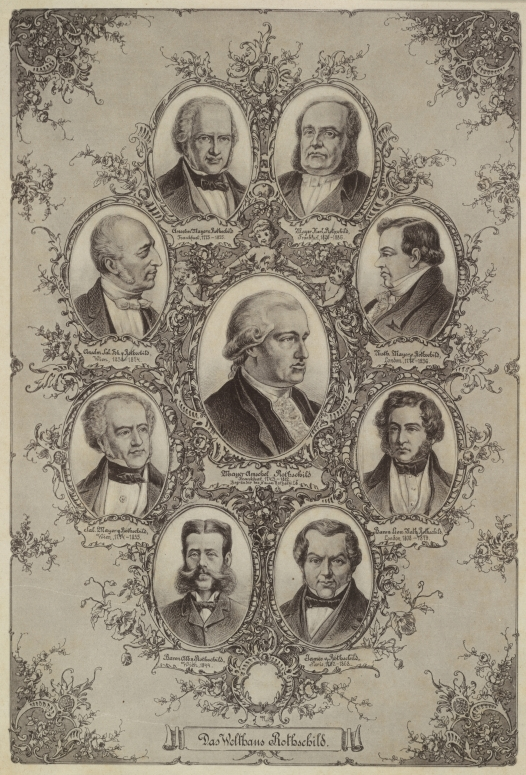
The result was the first truly international bank. A loan could be arranged in London, funded in Frankfurt, and paid out in Paris, all within the same family. During the Napoleonic Wars, when moving money across Europe was dangerous and slow, that network was worth more than gold. Mayer himself died in 1812, before the system paid its greatest dividends. But the figures show what his design produced: the combined capital of the five houses stood at £1.8 million in 1818, six years after his death, and had grown to £9.5 million by 1852, according to the historian Niall Ferguson. Mayer never saw those numbers. He built the machine that made them.
Why no fortune is recorded
It is tempting to fill the gap with a number, and many websites do. None of them can say where the number comes from, because no source exists. Eighteenth-century Frankfurt did not publish rich lists. Mayer’s estate was a private family matter, divided under his will, and the records that survive concern the business, not his personal balance sheet. Even the family’s own archive, which is unusually complete for a private bank, does not give a single figure for Mayer’s wealth at death.
What can be said is what he left behind, and it was considerable: a banking house with a royal client, a name trusted across Europe, and five sons trained to run a financial empire. His son Nathan would die in 1836 worth £3.5 million — about 0.62% of British national income — and that fortune began with Mayer’s Frankfurt counter. The founder’s wealth is best measured not in pounds but in what the pound figure became: within forty years of his death, his five houses held the largest private fortune in the world.
Frequently Asked Questions
What was Mayer Amschel Rothschild’s net worth?
No verified personal net-worth figure exists for Mayer Amschel Rothschild. No record of his fortune at his death in 1812 survives. What is documented is the capital of the five houses his sons built: £1.8 million combined in 1818, growing to £9.5 million by 1852.
How did Mayer Amschel Rothschild make his money?
He began as a money changer and rare-coin dealer in Frankfurt’s Jewish ghetto, then became court factor to the Landgraves of Hesse-Kassel, managing the fortune of one of Germany’s richest rulers. In the 1760s he founded his own banking house on the strength of that court connection.
Why is the family called Rothschild?
The name comes from the family’s ancestral house in the Frankfurt Judengasse, built in 1567, which bore a red shield as its sign — “zum rothen Schild” in German. The house sign became the family name.
What do the five arrows on the Rothschild coat of arms mean?
The five arrows stand for Mayer’s five sons — Amschel, Salomon, Nathan, Carl and James — and refer to Psalm 127, which compares sons to arrows in a warrior’s hand. The family motto is Concordia, Integritas, Industria: Harmony, Integrity, Industry.
Related reading: Rothschild family, what net worth means, how billionaires make money, Bernard Arnault, Nathan Mayer Rothschild, and James de Rothschild.
Sources
- Wikipedia — “Mayer Amschel Rothschild”
- Wikipedia — “Rothschild family”
- Wikipedia — “N M Rothschild & Sons”
- Niall Ferguson, historian — combined capital of the five Rothschild houses, £1.8 million (1818) and £9.5 million (1852), via Wikipedia
Net worth figures are estimates based on publicly available sources and may vary.